I like to say we're just fishermen going fishing. The more lines we have in the water, the more bites we get. This session was about what to do when you actually get a bite: how to set the hook and start reeling them into the boat.
It's week two of our month long series on tired landlords and absentee owners, with a focus this week on out of state absentee owners. I walked through the most common replies we get when we reach out to them, and exactly what I say back to each one.
The message that gets the reply
These replies come from a simple opening question. Something like: "Is there any chance you'd consider selling your property at 123 Banana Street to a private client of ours in the next 30 to 60 days?"
Another version of the same idea: would you be totally opposed to looking at an offer on the property? We've got a private client ready, willing and able to make you an offer in the next 30 to 60 days.
And we always close with "If you could please let me know either way." If you missed the earlier session in this series, I covered what we say on the phone, in voicemail, text and email to get people responding in the first place.
Reply 1: "Yes"
That's what we want to hear. Here's what I say back:
"Okay, great. Let me put together some preliminary numbers for you and I'll get back to you tomorrow morning or later this afternoon."
Then I ask, "Does that work?"
The timing depends on when I reached out. If I'm doing outreach in the morning, I say this afternoon. If I'm reaching out in the afternoon, I say tomorrow morning.
Why the question at the end? Micro commitments. The more I get them replying and engaging with me, the more likely they are to transact with me when the time and the motivation is right. In the fishing analogy, every micro commitment pulls them a little closer to the boat.
Reply 2: "Maybe," "potentially" or "not sure"
They might use different words, but it's the same idea. And this is where it gets pretty repetitive, on purpose:
"Totally understand. Let me put together some preliminary numbers for you and I'll get back to you tomorrow morning or this afternoon. Does that work?"
We're just trying to set the hook.
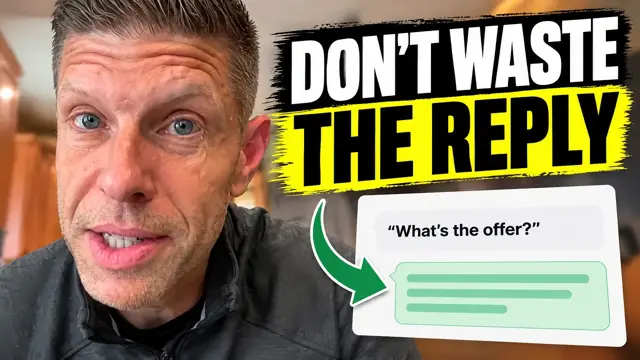
Reply 3: "What's the offer?"
"Great question." Then the same thing: let me put together some preliminary numbers for you, I'll get back to you at a set time, does that work?
You'll notice the pattern. We acknowledge what they said. We let them know we're going to get to work for them. And we end with a clarifying or commitment question.
Reply 4: They just give you a price
Tired landlords and absentee owners, especially out of state owners, are more often not emotional about the property. Not always, but many of them are black and white, dollars and cents. So some will literally just reply with a number.
In that case I say something a little different but similar: "Got it." Then I let them know I'll put together some numbers to see if we're in the right ballpark, and I'll get back to them tomorrow morning or this afternoon. Does that work?
Sometimes the number they throw out is outrageous. Sometimes it's very realistic, and maybe even already discounted compared to what you can put together for them.
A quick but important side note: you need a real buyer
All of this depends on having a buyer, or buyers, and a real path to an offer. We can't be playing bait and switch.
That's why step one of the 1 Deal A Week blueprint is buyers, specifically organizing your buyer tackle box. As I put it on the stream, "without a buyer no one is getting paid." Not you, not the seller. Nobody gets what they actually want.
When you have that organized and someone asks, "Do you actually have a buyer? Do you actually have an offer?" you can say confidently that you do. I can't guarantee they'll find the offer acceptable, but I can get them an offer.
Reply 5: "No"
No isn't the end of the story. Especially with tired landlords, absentee owners and out of state absentee owners.
"Okay, got it. Do you have any other properties in your portfolio that you might consider an offer on right now or that you might consider selling right now?"
If they still say no: "Makes sense. Are you looking to add anything to your portfolio that we might help you find?"
You can also ask if they'd mind you staying in touch from time to time about the property in case anything changes.
With this audience, we like to go for three nos. In my words, "More often than not, you'll get a yes before you get three nos." Not every time, but more often than not.
Bonus reply: "Not at this time"
This is a no with a qualifier, and it tells you that at some point in the future they might be open to an offer or open to selling. So I lean in and get genuinely curious. Childlike curiosity. "Just curious. Is it currently rented?"
I try to clarify some information about the property. And I don't let them off the hook without asking if they have any other properties they might consider selling or getting an offer on right now.
When they call back and ask "Who's this?"
Some people call back without listening to your voicemail or reading your text. They just see a missed call. So they say, "Who's this? You called me. What's this about?"
I tell them my name and brokerage, then: "Gotcha. Well, we've been reaching out to quite a few folks. Give me a second to pull up your info." I pull up the property, confirm the details, and ask if they'd consider an offer from a private client. That's it.
Key takeaways
- For yes, maybe and "what's the offer," the reply is almost the same every time: acknowledge, promise preliminary numbers, set a time, and ask "Does that work?"
- That closing question builds micro commitments, which make people more likely to work with you when the time is right.
- When they name a price, tell them you'll run numbers to see if you're in the right ballpark.
- Only do this when you have a real buyer and a real path to an offer. No bait and switch.
- No isn't the end. Ask about other properties in their portfolio, then whether they want to buy, and go for three nos.
- "Not at this time" means maybe later, so get curious and learn more about the property.